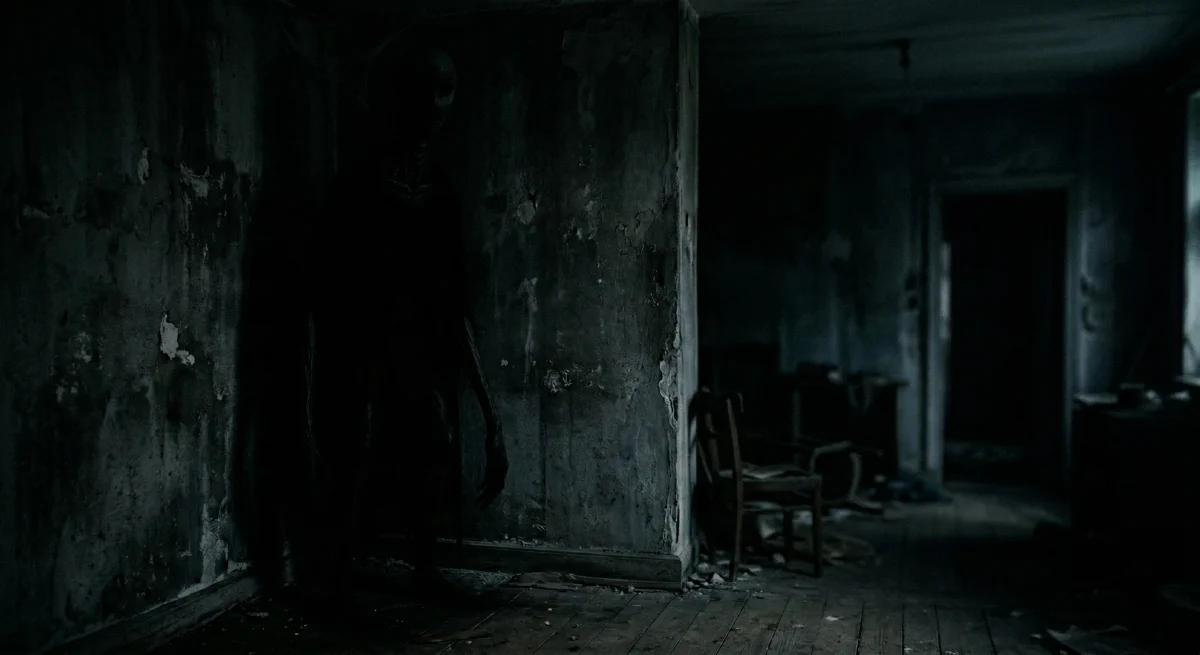
Chapter 2: The Call
The coffee was instant, which was fine. Ellie had stopped buying the good stuff years ago, around the same time she’d stopped buying wine and candles and anything else that implied she might sit down and enjoy something. Maxwell House, a spoonful, hot water from the kettle. She drank it standing at the counter, looking at the calendar on the wall without reading it, and then she rinsed the mug and put it upside down on the rack and went to find her coat.
The afternoon was already dying. January in Millbrook meant about five hours of useful daylight, most of it the color of dishwater, and by four o’clock the sky would be that particular grey that wasn’t quite dark but wasn’t light either, the kind of sky that made people turn their lamps on and pull their curtains shut and stop pretending they might go outside. Ellie had things to do before her shift. The same things she always had to do, on the same day she always did them, in the same order she’d been doing them since she’d realized that a schedule was the difference between functioning and not.
She scraped the Civic’s windshield again. The frost was lighter this time, a thin skin that came off in sheets under the credit card’s edge. The heater took its usual three blocks to kick in, and by then she was already on Route 4, heading toward the Kroger on the west side of town.
Millbrook looked different in the daytime, though different wasn’t the right word. It looked the same, just more visible. The boarded storefronts she passed at seven in the morning were still boarded at four in the afternoon, but now you could read the signs above them. Sal’s TV Repair. Millbrook Shoes. The Card Shoppe, with the extra pe that had probably seemed classy in 1972. Some of the boards had been painted over, as if that made a difference, and some had graffiti, and some had been there so long they’d weathered to the same grey as the buildings behind them, the storefronts and the boards becoming one surface, sealed shut.
She turned onto Market Street. The movie theater was showing Tombstone, three weeks after Christmas, which meant they’d gotten the print late and would run it until the reels wore thin. A couple of teenagers were standing outside the pizza place next door, jackets unzipped because being cold was less important than looking like you didn’t care. They reminded Ellie of something, and she looked away.
The Kroger was half empty at this hour, which was why she came at this hour. The after-work crowd hadn’t arrived yet and the retirees had already been and gone, pushing their carts through the aisles with the careful deliberation of people for whom grocery shopping was the day’s main event. Ellie moved quickly. She knew the layout the way she knew the hospital corridors, by muscle memory, her body navigating while her mind went elsewhere. Lean Cuisines, four of them, because they were on sale and because they were exactly one meal each, no leftovers, no waste. Milk. Bread. Coffee. Apples, the cheapest kind, which were always Red Delicious and never were. Toilet paper. She did not browse.
The checkout girl was young, seventeen or eighteen, and she rang Ellie’s items without looking at them or at her, her fingers moving over the register keys with the automated precision of someone who had scanned ten thousand groceries and would scan ten thousand more. “Eleven forty-two,” she said, and Ellie paid in cash and carried the single bag to her car.
The laundromat on Vine Street was the only one left in Millbrook. The other had closed when its owner died and nobody bought the building, and now it sat between a barbershop and an empty lot where kids rode their bikes in summer, its windows soaped over and its sign still hanging: SUDS. The surviving laundromat was called Millbrook Wash-N-Dry, which wasn’t a name so much as a description, and it smelled the way all laundromats smell, of detergent and warm lint and the particular loneliness of public spaces where people sit without talking.
Ellie put her scrubs in a machine, fed it quarters, and sat down on the plastic chair by the window. Three other people were there: an older woman folding towels with the grim focus of someone performing surgery, a man reading the Millbrook Gazette with his feet on a basket of whites, and a young mother whose toddler was trying to climb into a dryer. Nobody spoke. The machines hummed and churned. Rain had started, thin and cold, streaking the window and turning the parking lot into a grey wash.
She sat and did nothing, which was harder than it sounded. Ellie’s hands wanted to be busy. At the hospital they always were, charting, checking, adjusting, pouring, the constant low-grade motion of care. Here there was nothing to do but wait, and waiting meant thinking, and thinking was where the trouble started.
She watched the rain. A car pulled into the gas station across the street and a man got out and stood pumping gas with his collar up, shoulders hunched, the kind of posture that said he’d been cold for so long he’d forgotten what warm felt like. Beyond the gas station, the road sloped downhill toward the east side, toward the old residential blocks, and Ellie could see, just barely through the rain, the water tower with MILLBROOK painted on it in letters that had been white once and were now the color of old teeth.
Tommy used to say the water tower looked like a robot. A fat robot with skinny legs, standing in a field, watching the town. He’d been nine, maybe ten, and they’d been in the back seat of their mother’s car, driving home from somewhere (the dentist? A cousin’s birthday?), and Tommy had pressed his face against the window and said, “Look, Ellie, it’s a robot. A big dumb robot just standing there doing nothing.” And she’d said, “It’s a water tower, dummy,” and he’d said, “That’s its cover story.”
The memory arrived without permission, the way Tommy’s memories always did. Not as narrative, not as scene, but as sensation: the fog of his breath on the car window, his sneakers on the seat (Rachel yelling at him to put his feet down), the weight of his head against her shoulder when he fell asleep on the drive home. He had been small for his age. Everyone said so. Small and quick and loud, the kind of kid who talked to strangers and climbed things he shouldn’t and believed the water tower was a robot because the world was still a place where things could be something other than what they were.
He would have been twenty-seven this year. Ellie did the math sometimes, involuntarily, the way you might calculate a tip or count the change in your pocket. Twenty-seven. He might have been married. Might have left Millbrook, gone to college, done something. Or he might have stayed, like she had, working a job that paid enough and drinking coffee that cost nothing and scraping frost off a car that was slowly rusting into the road. There was no way to know, and that was the thing about grief that nobody warned you about. Not the loss itself, but the loss of the other versions, the parallel lives that should have existed and didn’t, the empty space where a person would have been.
The dryer buzzed. Ellie folded her scrubs, stacked them in the basket, and carried them out to the car. The rain had stopped. The sky was darker now, the last of the daylight leaching out of it like water from a sponge, and the streetlights were coming on one by one along Vine Street, casting their yellow circles onto wet pavement.
She needed gas. The station across the street was a Marathon, one of the two in town that hadn’t closed, and she pulled in and filled the Civic’s tank while the pump clicked and the numbers rolled over slowly and the cold ate through her jacket. Twelve dollars and change. She went inside and paid and the attendant, a heavy man with a Bengals cap and a mustache that looked like it had been grown in the seventies and never reconsidered, said “Cold one,” and Ellie said “Yep,” and that was the longest conversation she would have with another human being until she got to work.
She took the long way back to Birch Street. Not on purpose, or not exactly. There were two routes from the Marathon to her apartment, and the shorter one went down Elm and across Third, and the longer one went down Prospect and along Hawthorn, and the difference was maybe four minutes, and the difference was also that Hawthorn ran past the east side of Linden Park and then through the 400 block of Oak Street, where the houses were small and close together and looked like they’d been built from the same set of plans.
She took Hawthorn.
Linden Park was empty, as it always was in January. The swings hung motionless, the chains dark with rain. The merry-go-round, which had been old when Ellie was a child, sat at a slight tilt, one of its bars bent from years of use or abuse. The basketball court had puddles in the low spots and a hoop with no net. In summer it would be full of kids, the sounds carrying across the neighborhood, shouts and laughter and the particular shriek of someone being chased. In January it was just a flat, wet, empty space surrounded by bare trees, and Ellie drove past it without slowing down, but her eyes went to it anyway, to the bench by the basketball court where she’d sat with Tommy the last summer before he died, eating popsicles from the gas station, his lips stained red, his sneakers swinging because his feet didn’t reach the ground.
She didn’t think about it. She drove.
Oak Street. The 400 block. The houses here were ranches, mostly, built in the fifties for the mill workers and their families, three bedrooms and one bathroom and a yard that was big enough for a dog but not much else. Some of them had been kept up. Some hadn’t. Number 414 had been kept up. The gutters were clean, the walk was shoveled, the porch light was on even though it wasn’t quite dark yet. Rachel’s car, a tan Buick that was ten years old and immaculate, sat in the driveway. A light was on in the kitchen window, yellow and warm through the thin curtains.
Ellie didn’t slow down.
The house passed on her right, there and then behind her, a frame of yellow light in the rearview mirror that shrank as she reached the end of the block. She didn’t look at it again. She turned on Elm and drove to Birch Street and went inside. She put her groceries away and ate a Lean Cuisine standing at the counter (chicken teriyaki, which tasted like the plastic tray it came in but was two hundred and eighty calories and required only a microwave and four minutes and zero thought). Then she changed into clean scrubs and drove to work.
The parking lot at Thornwood was fuller in the evenings, the overlap between day shift’s departure and night shift’s arrival creating a brief illusion of adequate staffing. Ellie parked in her usual spot, by the dumpsters, where nobody else wanted to park because of the smell in summer but which was fine in January because everything smelled like nothing.
She clocked in at 10:45 and got report from Linda, the evening charge nurse, who was already wearing her coat and had her keys in her hand. “Quiet day. Rennick adjusted Morrison’s meds, upped the Haldol. Aguilar had a rough afternoon, wouldn’t eat lunch, settled after dinner. New admit in 34, Clarence Webb, voluntary, depression with psychotic features. Don’t let his wife call after nine, she winds him up. Everything else is in the book.”
“Thanks, Linda.”
“Brenda called in.”
“Of course she did.”
“Patel’s covering. She’s already on the floor.”
“Good enough.”
Linda left, and Ellie was alone at the station with the dying fluorescent (still dying, still flickering, 4-6 weeks) and the stack of charts and the particular silence that settled over Thornwood after the evening shift cleared out, the building exhaling, the corridors emptying of purposeful movement and filling with the slower, heavier presence of the night.
She started rounds.
The ward had a rhythm at night, and after six years Ellie knew it the way a musician knows time signature: instinctively, without counting. The first hour was settling. Patients who’d been awake for the evening activity (a movie tonight, she could tell from the lingering smell of microwave popcorn in the dayroom) were finding their way back to bed. The ones who slept well were already under. The ones who didn’t were beginning their negotiations with the dark.
Room 14, Mr. Aguilar. Awake, which was unusual for this early. He was sitting up, his hands in his lap, and when Ellie opened the door he turned to look at her with an expression she couldn’t read. Not distress, exactly. Something more like attention, like someone listening to a sound just below the threshold of hearing.
“Doing okay, Mr. Aguilar?”
“Yes.” He said it carefully, as though the word required thought. “Yes, I think so.”
“Linda said you had a tough afternoon.”
“I wasn’t hungry.” He looked at his hands. The tremor was there, the fine Haldol shake, his fingers vibrating slightly against his thighs. “Ellie. Do the lights in here seem different to you?”
She glanced up at the fluorescent. It was the same as always: flat, institutional, humming faintly. “Different how?”
“I don’t know. Thinner.” He frowned, still looking at his hands. “Never mind. It’s nothing.”
She checked his vitals, marked his chart, and moved on.
Room 18, Mr. Hoffman. Ellie didn’t know Hoffman well. He was a transfer from the state facility in Athens, paranoid schizophrenia, had been at Thornwood for three months. A big man, quiet, kept to himself. He did puzzles in the dayroom during the day and went to bed early and never caused trouble, which meant the staff largely left him alone, which was how underfunded psychiatric care worked: the quiet ones got less.
Tonight Hoffman was not in bed. He was standing at the window, both palms flat against the reinforced glass, his forehead pressed to it so that his breath made a small fog on the surface. He was a large man in the small room, and the sight of him, motionless, pressed against the glass like something trying to get out, made Ellie pause at the observation window before going in.
She knocked. “Mr. Hoffman?”
He didn’t answer. She opened the door.
“Mr. Hoffman. It’s Nurse Vance. Night check.”
“I know.” His voice was low, almost subvocal. He didn’t turn from the window. “It’s a busy night.”
“Busy how?”
He shrugged, a slow roll of heavy shoulders. “Out there. Lots of movement.” He paused. “Lots of movement everywhere tonight.”
Ellie looked past him, out the window. The hospital grounds were dark and still. The parking lot lights cast their amber circles. Nothing moved.
“Try to get some sleep, Mr. Hoffman.”
“Sure.” He lifted his hands from the glass. His palms left prints that faded slowly. “Sure thing.”
She marked his chart. Pt awake, standing at window. Alert, calm, mild disorganization. Monitor.
Room 24, Mrs. Singh. Ellie had been her primary night nurse since Singh’s admission four weeks ago. A retired schoolteacher, sixty-two, onset of schizophrenia so late that her family had initially assumed it was dementia. She was usually the easiest patient on the corridor, polite and cooperative and apologetic about being a bother in the way that women of her generation often were, as though illness were a lapse in manners.
Tonight Singh was sitting on the edge of her bed, feet on the floor, hands gripping the mattress on either side. The posture was so exactly Daniel’s from the night before that Ellie stopped in the doorway.
“Mrs. Singh? Can’t sleep?”
“Oh, hello, dear.” Singh smiled, but her eyes didn’t match. They were wide, moving. “I’m just… sitting. Sitting is fine, isn’t it?”
“Sitting is fine. Is something bothering you?”
“No. No, nothing’s bothering me.” She looked down at her hands, at the way they were gripping the mattress, and seemed surprised to find them there. She let go and folded them in her lap. “I suppose I’m a little wound up tonight. I don’t know why. The air feels funny. Like before a storm.”
“There’s no storm coming,” Ellie said. “Just cold. Can I get you something to help you sleep?”
“No, thank you. I’ll just sit a while. If that’s all right.”
“Of course.”
Ellie wrote: Pt awake, oriented, mildly anxious. Reports subjective sense of atmospheric change. Declined sleep aid. Monitor.
Room 31. The new woman. Her name was Fern Hadley, and she’d been admitted ten days ago after her landlord found her building structures out of tin foil and duct tape in her apartment, covering every reflective surface, every window, every gap under every door. She’d explained, calmly and rationally, that she was sealing the openings. When asked what openings, she’d said, “The ones they come through.”
Ellie looked through the observation window. Hadley was awake, sitting cross-legged on her bed, facing the far corner of the room. She was not moving. Her eyes were open and fixed. The posture was not Singh’s anxious perching or Hoffman’s restless vigil. It was something more still, more intentional. She was watching the corner with the patience of someone who expected to be watched back.
Ellie opened the door. “Ms. Hadley?”
“They’re very active tonight.” Hadley didn’t look at her. Her voice was conversational, almost pleasant, the tone of someone commenting on the weather. “Do you feel it?”
“Feel what?”
“The change. Like a frequency shifting. Like a television between channels.” She tilted her head. “No. You wouldn’t. Not yet.”
Not yet. The same words Daniel had used. Ellie noted it clinically, filed it: parallel language between patients, possible folie a deux if they’d been communicating, or simply coincidence. Shared imagery was not uncommon in group settings. Patients influenced each other. It was one of the arguments against housing different presentations together, the way delusions could become collaborative.
“Try to rest, Ms. Hadley.”
“I’m resting. This is how I rest.” She looked at Ellie then, for the first time, and her eyes were clear and focused and completely without fear. “You should rest too. While it’s still quiet.”
Ellie marked her chart and moved on.
She made the rest of her rounds. Gerald was in his chair. Mrs. Prescott was asleep, the wallpaper finally still. The new admit, Webb, was also asleep, lightly snoring, and Ellie checked his intake orders and made a note to remind the day shift about the wife’s calling hours. Mrs. Okafor was awake, as usual, and accepted her Benadryl without complaint.
Patel was at the station when Ellie came back, a young woman with dark circles under her eyes and the anxious competence of someone still new enough to be afraid of making mistakes. She looked up when Ellie sat down.
“Busy night?”
“Everyone’s awake.” Ellie pulled the charts toward her and started her documentation. “Hoffman, Singh, Hadley, Aguilar. All up. All a little off.”
“Full moon?”
“It’s not a full moon.”
“My grandmother always said full moon makes people crazy.”
“Your grandmother wasn’t a nurse.”
Patel smiled, apologetic, and went back to her charting.
Ellie wrote her notes. She did not think about the fact that four patients across three corridors were awake and agitated on the same night, or that three of them were the exact patients Daniel had named, or that their descriptions (thin light, busy movement, active tonight) shared a quality she couldn’t quite articulate. She thought about documentation, about medication schedules, about the new admit’s wife and the parameters of visiting hours. She thought about these things because they were her job, and her job was the structure that held the hours together, and without it the hours were just time, and time was just the dark, and the dark was just the space where you sat with everything you didn’t want to think about.
At 3:17 a.m. she went to check on Daniel.
Room 22 was quiet. The observation window showed him lying in bed, on his back, hands folded on his chest. The overhead light was off. The corridor light lay its pale rectangle across the floor. He looked, for the first time in months, like a man at rest.
Ellie opened the door softly, expecting to find him asleep. He wasn’t. His eyes were open, looking at the ceiling. But the frantic energy was gone, the coiled tension, the raw fixation on the corners. He lay still and easy, as if he’d set something down that he’d been carrying for a very long time.
“Daniel?”
“Hi, Ellie.” His voice was quiet. Not the forced calm of someone managing a crisis, but something more genuine. He sounded tired, the clean, honest tired of someone who might actually sleep.
“How are you feeling?”
“Better.” He considered the word. “Different. Like something settled.”
She came in, checked his vitals. Pulse steady. Breathing even. His pupils were still dilated, but less than last night, and his hands, when she took his wrist for the pulse, were warm and still. No tremor beyond the Haldol baseline.
“Rennick adjusted your medication today.”
“I know. More Haldol.” The ghost of humor again, the old Daniel, the teacher. “I can feel it in my jaw. Everything tastes like aluminum foil.”
“That should ease up in a few days.”
“I know.” He turned his head to look at her. In the dim light his face was all angles and hollows, older than thirty-four, older than the grey at his temples and the exhaustion in his bones. But his eyes were clear. “Hey, Ellie. How’s your mystery novel?”
She almost laughed. The one she’d invented to calm him down, the plot she’d made up on the spot about a detective in San Francisco solving a case involving missing paintings. “I haven’t gotten back to it.”
“You should. The detective was interesting. You said she was stubborn.”
“I said she was determined.”
“Same thing.” He smiled. It was a real smile, small and tired and human, and it was the first one she’d seen from him in months, and something about it made her chest feel tight in a way she didn’t want to examine.
“You should sleep, Daniel.”
“I think I will.” He looked back at the ceiling. “Ellie?”
“Yeah?”
“Thank you. For listening. I know I… I know it’s not easy, what I talk about. Most people just nod and write things down. You actually listen.”
“That’s my job.”
“No. It’s more than that.” He was quiet for a moment. “You were always kind to me. I want you to know that I noticed.”
She stood in his doorway and looked at him. He lay on his back with his hands folded and his eyes on the ceiling and his face at rest, and he looked like a man who had made peace with something, and the word that came into Ellie’s mind was finished, and she didn’t know what it meant and she didn’t want to examine it and she put it away the way she put everything away, in the clean, organized space behind her professionalism, where things could be filed and labeled and kept at a distance.
“Get some sleep, Daniel. I’ll see you tomorrow.”
“Goodnight, Ellie.”
She closed the door. The observation window showed him still, eyes closed now, hands folded. Resting. The corridor stretched in both directions, long and quiet and empty, and the fluorescent above the nurses’ station hummed its dying hum, and somewhere in the ward a patient murmured in their sleep, and the building settled, and the night went on, and Ellie walked back to the station and sat down and picked up her pen and did not think about the way Daniel had said you were always kind to me in the past tense, as though kindness were something already completed, as though it belonged to a time that had already ended.
She wrote her notes. She finished her shift. She went home.