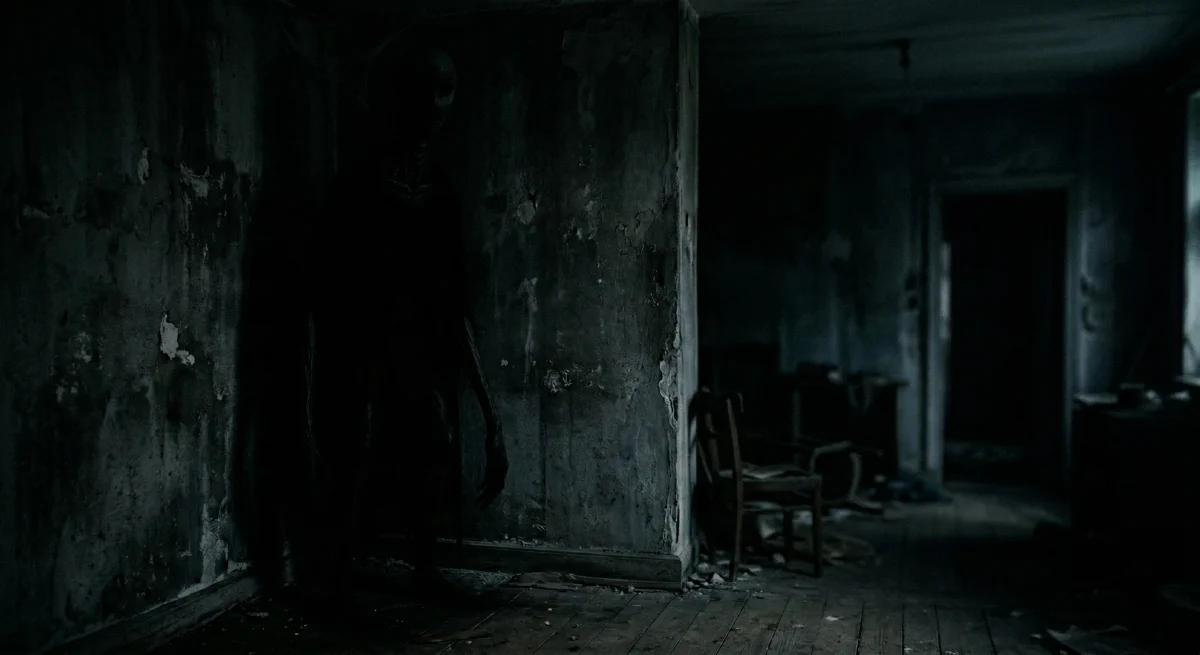
Chapter 6: The Lights
She called in sick at six-thirty in the morning, standing in the kitchen with the phone cord wrapped around her finger and the curtain still drawn across the window and the dark still pressing at the edges of everything.
Kim answered. “Thornwood, day shift.”
“Kim, it’s Ellie. I can’t come in tonight.”
A pause. Not long, but Ellie heard it, the way she heard all pauses, the brief recalibration of someone adjusting their expectations. Ellie Vance did not call in sick. Ellie Vance had not called in sick in six years. The last time had been the flu, real flu, the kind that put you on the bathroom floor for two days, and even then she’d come back a day earlier than the doctor said because the ward was short and the patients were hers and staying home felt worse than being upright.
“You okay?”
“Stomach thing,” Ellie said. The word sick sat wrong in her mouth. She wasn’t sick. Or she was, in a way no sick day could fix, in a way that had nothing to do with her stomach and everything to do with the corner of her bedroom and the thing that had stood in it and the question she’d been sitting with in the dark for hours, gripping the mattress, watching nothing.
“Take care of yourself,” Kim said. “We’ll manage.”
“Thanks.”
She hung up and stood with her hand on the phone. The apartment was quiet around her, and the quiet was the wrong kind, the attended kind, the kind that had weight.
She did not go back to bed. She stood at the counter and drank coffee (Maxwell House, a spoonful, hot water from the kettle, the sequence so automatic that her hands performed it while her mind was somewhere else entirely) and she looked at the curtain across the kitchen window and she thought about Rachel.
Not the way she usually thought about Rachel, which was not at all, or which was the deliberate absence of thought, the way you don’t touch a bruise. This was different. This was the heredity chapter from Torrey’s book, the ten percent, the first-degree relative, the door that had closed before she was old enough to know what was behind it. Her father. His troubles. The things Rachel had never said and Ellie had never asked because asking would have meant standing on the wrong side of the observation window, and as long as she didn’t ask, the glass held.
The glass wasn’t holding anymore.
She picked up the phone again. She dialed the number she still knew by heart, the way you know your own address, the way you know the shape of a room you grew up in even if you haven’t been inside it in years. It rang four times. Five. The answering machine clicked on, and Rachel’s voice, tentative and recorded and unchanged, said, “You’ve reached the Vances. Leave a message and we’ll call you back.” The Vances. Plural. As if Tommy might still pick up. As if her father might still be in the other room.
Ellie hung up before the beep.
She tried again at noon. This time Rachel answered on the second ring.
“Hello?”
“Mom. It’s Ellie.”
The silence that followed was not the silence of someone who hadn’t heard. It was the silence of someone absorbing a shock, the held breath before the response, and when Rachel spoke her voice was careful in the way of a person handling something they were afraid to drop.
“Ellie. Hi. Oh, honey, hi.”
“I was wondering if I could come by. This afternoon.”
Another silence. Shorter. “Of course. Of course you can. I’m here. I’m always here.” A pause. “Is everything all right?”
“I just want to see you,” Ellie said, and the sentence was true in a way she hadn’t expected, true beneath the reason she was calling, beneath the heredity question and the clinical need, true in the way that a person standing in the dark sometimes just wants to be in a room where someone has left the light on.
“I’ll put the kettle on,” Rachel said.
The drive to Oak Street took eleven minutes. Ellie had timed it once, years ago, before the distance between them had become the kind you measured in something other than miles. She drove the same route she’d taken two weeks ago, Hawthorn to the 400 block, past Linden Park with its empty swings and its tilted merry-go-round, past the houses built for mill workers in the fifties, three bedrooms and one bathroom and yards for dogs. The afternoon was grey and still, the sky pressed low over the rooftops like a hand holding something down, and the heater blew its dust-and-rubber warmth and the Civic shuddered over the railroad tracks and everything was ordinary.
She slowed down this time.
The tan Buick was in the driveway. The gutters were clean. The walk was shoveled, a neat path cut through the thin layer of snow that had fallen overnight, the edges precise, the work of someone who still took care of things because taking care of things was what you did. The porch light was on. The kitchen window glowed yellow through the thin curtains, the same yellow it had glowed when Ellie drove past two weeks ago without stopping, the same yellow it had glowed for as long as she could remember, Rachel’s kitchen light, always on, as if she were waiting for someone to come home.
Ellie parked behind the Buick and sat in the Civic with the engine off and her hands at ten and two and the cold already seeping through the gaps in the doors. She looked at the house. The front door with its storm glass. The concrete steps. The railing her father had installed when she was small, the metal kind, painted black, the paint chipping now to show the rust beneath. Tommy’s basketball hoop was still bolted above the garage door. The net was gone, had been gone for years, but the backboard and the rim were still there, rusting quietly, waiting for a game that would never come.
She got out of the car.
The cold hit her face. The walk was ten steps from the driveway to the porch and she took them. She was at the door. She could hear the kettle, faintly, through the storm glass, and she raised her hand and knocked.
Rachel opened the door and the shock on her face was immediate, raw, the kind of expression that arrives before a person has time to arrange their features into something composed. She had known Ellie was coming. She had put the kettle on. But knowing and seeing were different things, and the distance between a voice on the phone and a daughter on the porch was thirteen years of silence and blame and the particular failure of two people who loved each other and could not find the door.
“Hi, Mom.”
Rachel was smaller than Ellie remembered. She’d always been small, five-three, fine-boned, the kind of woman who disappeared in a crowd, but she seemed to have contracted further, as if grief had a gravity that pulled you inward over the years. Her hair was grey now, all of it, cut short and neat. She wore a cardigan over a blouse and slacks and slippers, the clothes of a woman who was home and expected to stay home and had made her peace with that. Her hands moved to the doorframe, then to her collar, then to the chain around her neck where a small cross hung. The hands were constant, touching, adjusting, smoothing, but not nervous, not fluttering. Deliberate. The way a person touches things when they need to know the world is solid.
“Come in,” Rachel said. “Come in, come in.”
The house was a museum.
Ellie stepped inside and the smell hit her first, the specific smell of 414 Oak Street that she had not smelled in years and that arrived in her like a key turning: lemon furniture polish and old carpet and something baked, something sweet, as if Rachel had made something that morning, a cake or cookies, just in case. The hall was narrow, the wallpaper the same faded floral it had been since the seventies, and on the wall to the left, in frames that hadn’t been moved in a decade, the photographs.
Tommy’s school portraits. First grade through eighth. Eight frames in a row, the backgrounds shifting from mottled blue to grey to that strange laser-light pattern they’d used in the late eighties, and in each one Tommy grinned, gap-toothed and then full-toothed and then braces and then gone. His room was at the end of the hall. The door was closed.
Ellie did not look at the door. She followed Rachel into the kitchen.
“Sit down,” Rachel said. “I made tea. Do you still drink tea? I have coffee if you’d rather. I have both.”
“Tea’s fine.”
Rachel poured. Her hands were steady on the kettle, the motion practised, the ceremony of hospitality that she performed the way Ellie performed rounds, because the doing of it was the structure, and the structure was what held. She set a cup in front of Ellie and a cup at her own place and sat down across the small kitchen table with its checked cloth and its salt and pepper shakers shaped like cardinals, the same ones that had been on this table since Ellie was a child.
They looked at each other.
Rachel’s face was a landscape of years. The lines around her mouth and eyes had deepened, the skin along the jaw looser than Ellie remembered, the cheekbones more prominent. But the eyes were the same, dark and watchful, the eyes of a woman who had learned to read the weather in other people’s faces because her own weather had been bad for a very long time. She looked at Ellie the way she had always looked at Ellie, with a love so complicated and so bruised that it couldn’t find its own name.
“You look tired,” Rachel said.
“Night shifts.”
“You’re still doing nights? After all these years?”
“They suit me.”
Rachel nodded. She held her tea in both hands, the way Ellie held her coffee, and the symmetry of it, the two of them sitting at this table with warm cups and nothing to say, was so familiar and so painful that Ellie had to look away.
The kitchen was unchanged. The yellow curtains. The clock above the stove, a sunburst design, brass, a wedding present from someone whose name Ellie had never known. The refrigerator with its magnets: a Millbrook Hardware calendar (this year’s, January, nothing written on it), a faded photo of Tommy at Linden Park, a church bulletin. The counters were clean. The dish rack held two plates, one cup, one fork. The mathematics of a woman who lived alone.
“I’m glad you came,” Rachel said. Her voice was quiet, careful, the voice from the answering machine but warmer, closer, stripped of the recorded distance. “I wasn’t sure you would. When you called, I thought maybe you’d change your mind on the way over.”
“I didn’t.”
“No.” Rachel smiled. It was small and it cost her something. “You never did change your mind much. Even as a girl. Once you decided something, that was it.” She paused. “Tommy was the same way. Stubborn as a rock, the both of you.”
The name landed in the room like a stone in water. Ellie felt the ripple of it move through her, through the kitchen, through the thirteen years of silence between them. Tommy. In this kitchen. At this table. Eating cereal before school, legs swinging because the chair was too tall, milk on his chin, talking about whatever nine-year-olds talk about with the relentless energy of a person who believed every morning was interesting.
“Mom,” Ellie said. “I need to ask you something.”
Rachel’s hands stilled on the cup. The constant motion stopped. She looked at Ellie and there was something in her face, a bracing, the expression of a woman who had lived long enough to know that when someone says I need to ask you something in that tone, the question is going to hurt.
“All right.”
“Dad.” Ellie heard her own voice, steady, clinical, the voice she used at intake. “Did he ever… was there anything. Medically. Did he ever see things, or hear things, or have episodes of any kind.”
The silence that followed was different from the others. This one had texture. Rachel looked down at her tea and her jaw worked slightly, the small motion of someone chewing on words before deciding whether to release them. Her hands found each other on the table, the fingers interlacing, holding on.
“Your father had his troubles,” Rachel said.
“What kind of troubles?”
“He was… distant. You know that. You remember.”
“I remember he left.”
“Yes.” Rachel’s voice was even. Not defensive. She had been asked about this before, perhaps by herself, in the years of silence, in the long evenings in this kitchen with one plate in the dish rack. “He left when you were seven. Tommy was three. He said he needed space, which is what men say when they mean they need to be somewhere their family can’t see them falling apart.”
“Falling apart how?”
Rachel looked up. Her eyes searched Ellie’s face, and whatever she found there made her expression change, a subtle shift, a softening that was also a fear. “Why are you asking this, Ellie?”
“I just want to know.”
“You’ve never asked before. Not once, in thirty years.”
“I’m asking now.”
Rachel was quiet for a long time. The kitchen clock ticked. The refrigerator hummed. Outside, a car passed on Oak Street, its tires hissing on the wet pavement, and Rachel sat with her hands laced together and her tea cooling and her eyes on something Ellie couldn’t see.
“He was a good man,” Rachel said. “I want you to know that first. Whatever else I say. He loved you. He loved Tommy. He wasn’t… he wasn’t cruel, he wasn’t unkind. He was just… sometimes he wasn’t there. Even when he was sitting right next to you, he’d go somewhere, some place inside himself, and you couldn’t reach him. I’d say his name and he wouldn’t hear me. I’d say it again and again and finally he’d come back, and his eyes would be…” She stopped. “Different. Like he’d been looking at something far away.”
“Did he see things?”
“He never said that.”
“Did you ever think he might be…”
“Sick?” Rachel’s mouth tightened. “I thought a lot of things. I thought he was depressed. I thought it was the mill, the hours, the pressure. I thought it was us, that we weren’t enough, that whatever he needed was something this house couldn’t give him.” She unfolded her hands, pressed her palms flat on the table, the gesture of someone steadying themselves. “There were nights he’d sit in the living room in the dark. Not sleeping. Not watching television. Just sitting. And in the morning he’d be fine, or close enough to fine, and we didn’t talk about it because we didn’t talk about things in this family. That’s the way it was. You didn’t name it and it didn’t exist.”
“Was he ever diagnosed with anything?”
“No. He never saw anyone. He never would have. Men didn’t, back then. You just…” She shrugged, a small, precise gesture, the economy of a woman who had learned to contain large things in small spaces. “You just lived with it.”
It wasn’t enough. It wasn’t the answer Ellie had driven here for, the clean yes or no, the diagnosis, the name she could look up in Torrey’s book and find the percentages and know what she was dealing with. It was worse than either answer. It was ambiguity. The door to her father’s history stayed half-open, the way it had always been, and through the gap she could see shapes but not details, possibilities but not facts, and the not-knowing was its own kind of darkness.
“Why?” Rachel said. “Ellie, why are you asking about your father?”
“Just thinking about family. About health.”
“You’re not sick?”
“No. I’m fine.”
The lie came out clean. She heard it leave her mouth the way she’d heard patients’ lies for six years, the slight flatness, the fractional hesitation that a trained ear could catch and a mother’s ear caught faster. Rachel heard it. Ellie could see her hear it, the small contraction around the eyes, the intake of breath. But Rachel did not push. She had spent thirteen years not pushing, not calling too often, not showing up uninvited, not demanding more than Ellie was willing to give, and the restraint was not weakness. It was the discipline of a woman who had learned that holding on too tight was the surest way to lose what was left.
They drank their tea. Rachel told her about the church (a new minister, younger, she thought he tried too hard but he meant well). She mentioned Carol from down the street, who had just gotten a puppy and was already regretting it. She said the furnace had been making a noise and she’d called the repairman and he’d come out and charged her forty dollars to tell her it was fine. Small things. The currency of a life lived in a small house on a quiet street in a town that was slowly emptying out. She spoke with the care of someone arranging flowers, choosing each topic for its safety, its ordinariness, its distance from the thing that sat between them, which was everything.
Ellie listened. She held her tea and listened. She was here, in this kitchen, with her mother, and she was not here at all. She was in the library with Torrey’s book open to the heredity chapter. She was in her bedroom watching the corner. She was in B corridor with something tall keeping pace beside her. She was everywhere and nowhere and the kitchen was warm and the tea was warm and her mother was talking about a puppy and Ellie could not reach her across the table that was two feet wide and thirteen years deep.
She was getting ready to leave. She was standing, pushing back from the table, already composing the words (I should go, I have to get ready for work) when Rachel said it.
“I’ve been seeing something.”
Ellie stopped. Her hand was on the back of the chair and her coat was on the hook by the door and she stopped.
“What do you mean?”
Rachel looked at her tea. She turned the cup slowly on the table, a quarter turn, precise, the motion of someone buying time. When she looked up her expression was not afraid. It was puzzled. Wondering. The face of a person describing something they didn’t have a category for.
“Lights,” she said. “In the evenings. At the windows.” She gestured toward the kitchen window, the yellow curtain, the glass beyond it that faced the backyard and the neighbor’s fence and the bare branches of the oak tree that had been there longer than the house. “Not every night. Maybe two or three times a week. They come around dusk, when it’s getting dark but isn’t dark yet. At the edges of the glass.”
Ellie sat back down.
“What kind of lights?”
“That’s the thing. I don’t know. They’re not the streetlights. The streetlights are that orange color, you know, that awful sodium orange. These are different. Warmer. Softer. Like…” Rachel searched for the word, and the searching was genuine, the effort of a woman trying to describe something that existed outside her vocabulary. “Like candlelight, but steadier. And the color isn’t quite yellow and isn’t quite gold. It’s something in between. Something I don’t think I’ve seen before.”
She said it the way you’d describe a bird you’d spotted in the yard, something unexpected and lovely, something you wanted to share with someone. Not frightened. Not distressed. Curious. Almost peaceful.
“Do you think that’s strange?” Rachel asked. “I keep meaning to check if the Hendersons put up new lights, but I don’t think they did. It’s January. People don’t put up lights in January.”
Ellie’s hands were flat on the table. She could feel the checked cloth under her palms, the weave of it, the solidity of the wood beneath. She could feel her own pulse in her fingertips. Inside her chest, beneath her ribs, beneath the voice that said say something normal, say something kind, say something that isn’t what you’re thinking, the heredity chapter from Torrey’s book was screaming.
“It’s probably the streetlights,” Ellie said. “Refraction through the glass. The angle changes with the seasons.”
“Maybe.” Rachel smiled, and the smile was gentle, and a little embarrassed, and underneath it something that Ellie recognized because she had seen it in the mirror two days ago: the expression of a person who knows what they saw and knows it doesn’t fit and is deciding, in real time, how much of their own perception to trust. “You’re probably right. I just thought… I don’t know what I thought. They’re pretty, is all. Warm. It’s nice to have something warm at the windows in January.”
Ellie stood up. The chair scraped the linoleum. “I should go. I need to get ready for work.”
“Already?” Rachel stood too, and the disappointment moved across her face like weather, visible and suppressed in the same motion. She had been hoping for more. An hour, at least. A real conversation. Something she could hold onto after Ellie left, some proof that the distance was closing, that the thirteen years might be eleven or ten or something less than forever.
“I’m sorry. The shift starts at eleven.”
“I know. I know how it is.” Rachel followed her to the hall, and in the narrow space with Tommy’s portraits on the wall and the closed door at the end and the lemon-polish smell of a house that was kept clean because keeping it clean was the only thing left to do, she touched Ellie’s arm.
Her hand was warm. The fingers closed lightly, not gripping, just resting, the weight of a touch that asked for nothing.
“Come back,” Rachel said. “Don’t wait so long next time.”
“I won’t.”
“You say that.”
“I know.”
They stood in the hall and the portraits watched them and the closed door at the end was closed and Ellie looked at her mother and saw the lines and the grey hair and the cardigan and the cross on the chain and the hands that never stopped moving and the eyes that were dark and watchful and full of a love that had nowhere to go, and she could not tell her. She could not say Mom, I’ve been seeing things too, not lights, not warm things, something with no face that stands in the corner of my room and watches me while I can’t move. She could not say I went to the library and read a book about what might be happening to us and every page was a mirror. She could not say any of it, the way she couldn’t say it to Jan, the way she couldn’t write it in Daniel’s chart, because saying it would make it real in a way that silence didn’t, and the silence was terrible but the words would be worse.
“I love you, Mom.”
She didn’t know she was going to say it until she said it. It came out plain and unadorned and it sat in the hallway between them, and Rachel’s face did something complicated, a folding inward that was grief and gratitude and the sharp edge of hope, and she said, “I love you too, sweetheart,” and her voice broke on the last word, and Ellie opened the door and walked out into the cold.
The Civic was freezing. She sat in the driver’s seat and turned the key and the engine caught and the heater blew cold air and she sat with her hands at ten and two and looked at the house in the rearview mirror. The porch light was on. The kitchen window glowed yellow. Rachel was standing inside, behind the storm glass of the front door, watching her, one hand raised, and Ellie could see her and then she pulled away from the curb and the house shrank in the mirror the way it always did when she drove away from Oak Street, except this time she had been inside, and what she had found there had not helped.
She drove to Birch Street. She changed into scrubs. She drove to Thornwood.
The ward was the ward. Patel was at the station, Kim’s handoff notes in a neat stack. “Quiet day,” Patel said, and the word quiet meant what it always meant, which was something other than silent. Ellie took the charts. She started rounds.
Daniel was in his bed. On his back. Hands folded on his chest. Eyes on the ceiling. The same position. She looked at him through the observation window and did not open the door and he did not move and the corridor stretched away behind her, long and badly lit, and she moved on.
The fluorescents in B corridor were still dead, both of them. The dark pooled in two places. Ellie walked through it. She walked the full length of the corridor, past the stairwell junction, past the dead bulbs, past the shadows that gathered in the corners where the walls met. She did it deliberately. She did not look at the shadows. Nothing happened. Nothing moved. Nothing kept pace beside her. The corridor was empty and she walked through it and came out the other side and the emptiness should have been a relief and it was not. It was almost worse, the way a phone that should ring and doesn’t is worse than the ringing.
She finished rounds. She did her charting. Patel sat beside her and their pens scratched and the dying fluorescent above the station buzzed its slow buzz and the hours passed and nothing happened and the nothing was heavy.
Dawn came the way dawn came to Thornwood: grudgingly. Grey light through reinforced windows. The rattle of the breakfast cart. Ellie gave report to Kim and walked to the parking lot and the cold hit her face and the sky was the color of ash, the particular grey of early morning in January when the sun is technically up but hasn’t committed to it.
She crossed the parking lot to the Civic. She was reaching for the door handle when she looked up.
Habit. Routine. The way you glance at your own building when you come home, checking without checking, the animal scan that your body performs before your mind has a reason for it. She looked up at the windows of the east wing and then, without deciding to, across the parking lot, across the access road, to the sidewalk on the other side.
Something was standing on the sidewalk.
Not in the shadows. Not in a reflection. Not at the edge of her vision where the mind makes shapes from nothing. It was standing in the open, in the grey dawn light, on the concrete sidewalk across the road from the parking lot. Tall. Narrow. Still in the way she knew, the way she had learned, the stillness that was not the absence of motion but the presence of something choosing not to move. It was facing the building. It was facing the east wing windows, the windows of the ward, the windows behind which forty-three patients slept or didn’t sleep, and it was looking up at them with whatever it had instead of eyes.
Ellie stood with her keys in her hand and the cold on her face and she looked at it.
It did not vanish. It did not shimmer or dissolve or resolve into a fence post or a mailbox or the trick of light on tired eyes. It was there. Outside. In the world. In the daylight, such as it was, the grey January dawn that should have made everything ordinary, that should have stripped the shadows of their power, that should have been safe because morning was safe and daylight was safe and the things that watched from corners did not stand on sidewalks in the open air.
It was there.
She got in the car. She started the engine. She drove home. She parked on Birch Street and got out of the Civic and looked up at her apartment windows on the second floor, the blackout curtains visible behind the glass, and she looked across the street because she had to, because the looking was no longer something she could stop.
The street was empty. The bare trees. The neighbor’s bikes. The grey sky pressing down.
She went inside. She locked the door. She stood in the entryway and she did not look out the window. She did not pull back the curtain. She stood with her back against the door and her keys in her hand and the apartment was quiet around her, the attended quiet, the occupied quiet, and she breathed, and the breathing took effort, and outside, in the world that was supposed to be safe, something had been standing in the daylight and looking up at where she worked and where her patients slept and it had not hidden and it had not vanished and it had been real the way a wall is real, the way a table is real, and she could not un-see it and she could not explain it and she could not tell anyone and she stood in the entryway and the morning pressed against the windows and she was alone with all of it.